Djilakh Secondary School is conceived as a landscape for learning — an environment that celebrates connection to place, land, and community. Drawing inspiration from the sub-Saharan climate, landscape, and building traditions, the project employs adobe construction to form a built terrain: a series of learning spaces defined beneath a canopy of lightweight roofs.
Rather than a singular object, the school is envisioned as a village, where learning spaces, gardens, and shaded outdoor rooms are interwoven to create an engaging educational environment.
The existing perimeter wall is transformed into a thickened adobe enclosure, redefining the school’s presence along the street. A large archway carved from this wall marks the entry, celebrating arrival and establishing a civic threshold. Aligned with existing mature trees, the entrance forms a shaded passage into the campus and provides a direct connection between the primary and secondary schools.
Beyond the entry, the campus unfolds around a central courtyard. New buildings are located to the north, with administration, multipurpose hall, and amenities adjacent to the entrance, and four classrooms lining the northern boundary. This arrangement creates a flexible central space for assemblies, sport, and active play.
To the south, existing buildings may be refurbished or replaced with landscaped areas, while the area beyond the mature trees is reserved for agriculture, animal enclosures, and future expansion.
Adobe construction is celebrated for its tactile informality. Walls rise and fall rather than follow a fixed datum, sometimes becoming benches, sometimes defining enclosure, connecting interiors to gardens and courtyards while allowing light and breezes to permeate the learning spaces.
Walls are constructed from locally sourced laterite blended with site soil, enabling community participation in construction and providing a replicable model for future growth.
Environmental performance is embedded through thermal mass, natural ventilation, daylighting, and rainwater reuse. Northern walls protect classrooms from Harmattan winds, while other walls open to pocket gardens that enhance cooling and provide breakout spaces.
Fabric awnings using the patterns from local fabric designs, create shaded informal zones between classrooms and the courtyard and give each building a distinct identity. Slightly elevated tiled floors protect against seasonal rainfall and fine weave curtains can be drawn for protection during mosquito seasons.
Together, these strategies create a resilient, climate-responsive school grounded in local materials and traditions.
Djilakh Secondary School is conceived as a landscape for learning — an environment that celebrates connection to place, land, and community. Drawing inspiration from the sub-Saharan climate, landscape, and building traditions, the project employs adobe construction to form a built terrain: a series of learning spaces defined beneath a canopy of lightweight roofs.
Rather than a singular object, the school is envisioned as a village, where learning spaces, gardens, and shaded outdoor rooms are interwoven to create an engaging educational environment.
The existing perimeter wall is transformed into a thickened adobe enclosure, redefining the school’s presence along the street. A large archway carved from this wall marks the entry, celebrating arrival and establishing a civic threshold. Aligned with existing mature trees, the entrance forms a shaded passage into the campus and provides a direct connection between the primary and secondary schools.
Beyond the entry, the campus unfolds around a central courtyard. New buildings are located to the north, with administration, multipurpose hall, and amenities adjacent to the entrance, and four classrooms lining the northern boundary. This arrangement creates a flexible central space for assemblies, sport, and active play.
To the south, existing buildings may be refurbished or replaced with landscaped areas, while the area beyond the mature trees is reserved for agriculture, animal enclosures, and future expansion.
Adobe construction is celebrated for its tactile informality. Walls rise and fall rather than follow a fixed datum, sometimes becoming benches, sometimes defining enclosure, connecting interiors to gardens and courtyards while allowing light and breezes to permeate the learning spaces.
Walls are constructed from locally sourced laterite blended with site soil, enabling community participation in construction and providing a replicable model for future growth.
Environmental performance is embedded through thermal mass, natural ventilation, daylighting, and rainwater reuse. Northern walls protect classrooms from Harmattan winds, while other walls open to pocket gardens that enhance cooling and provide breakout spaces.
Fabric awnings using the patterns from local fabric designs, create shaded informal zones between classrooms and the courtyard and give each building a distinct identity. Slightly elevated tiled floors protect against seasonal rainfall and fine weave curtains can be drawn for protection during mosquito seasons.
Together, these strategies create a resilient, climate-responsive school grounded in local materials and traditions.

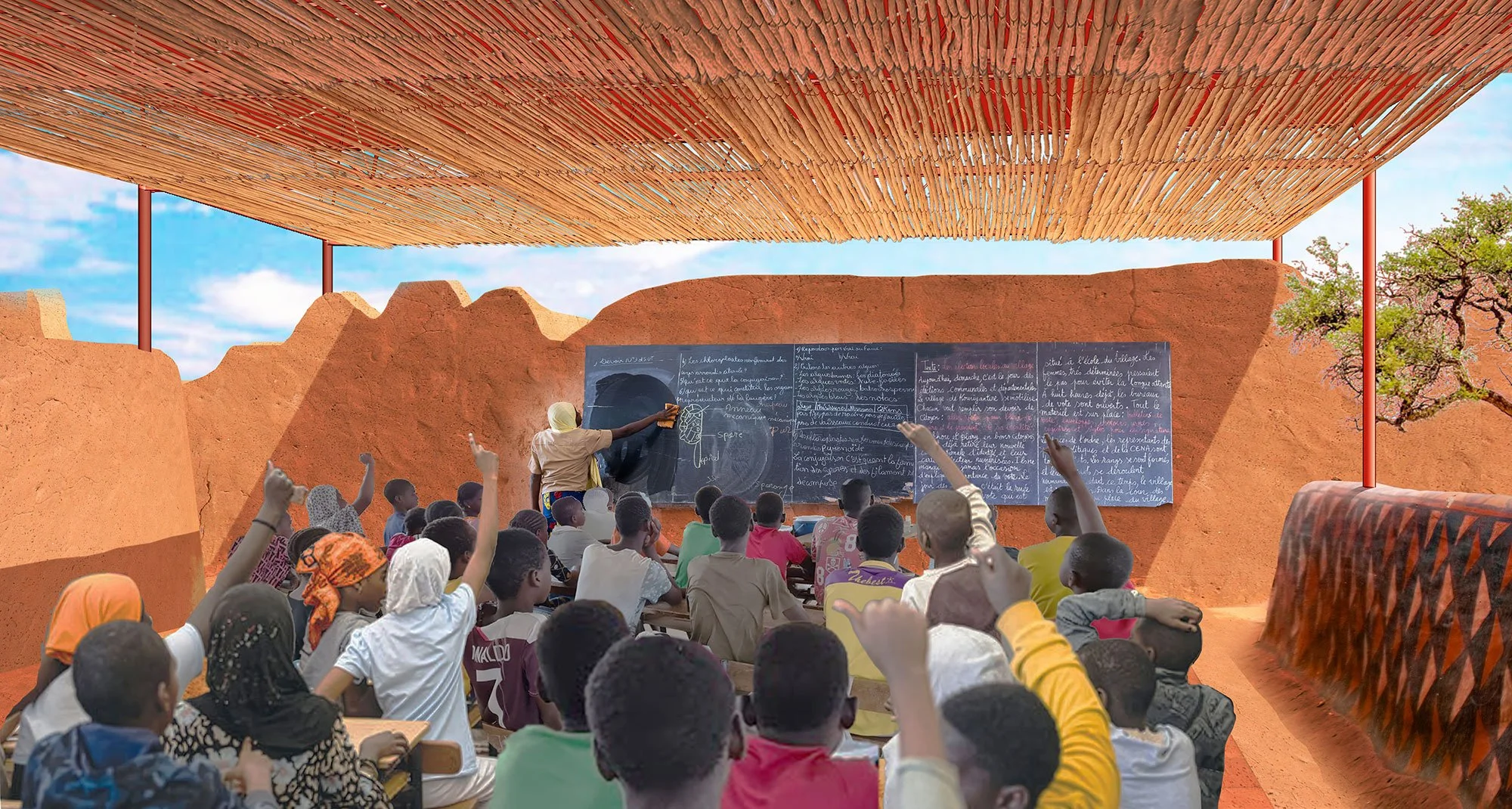 Image 1 of 9
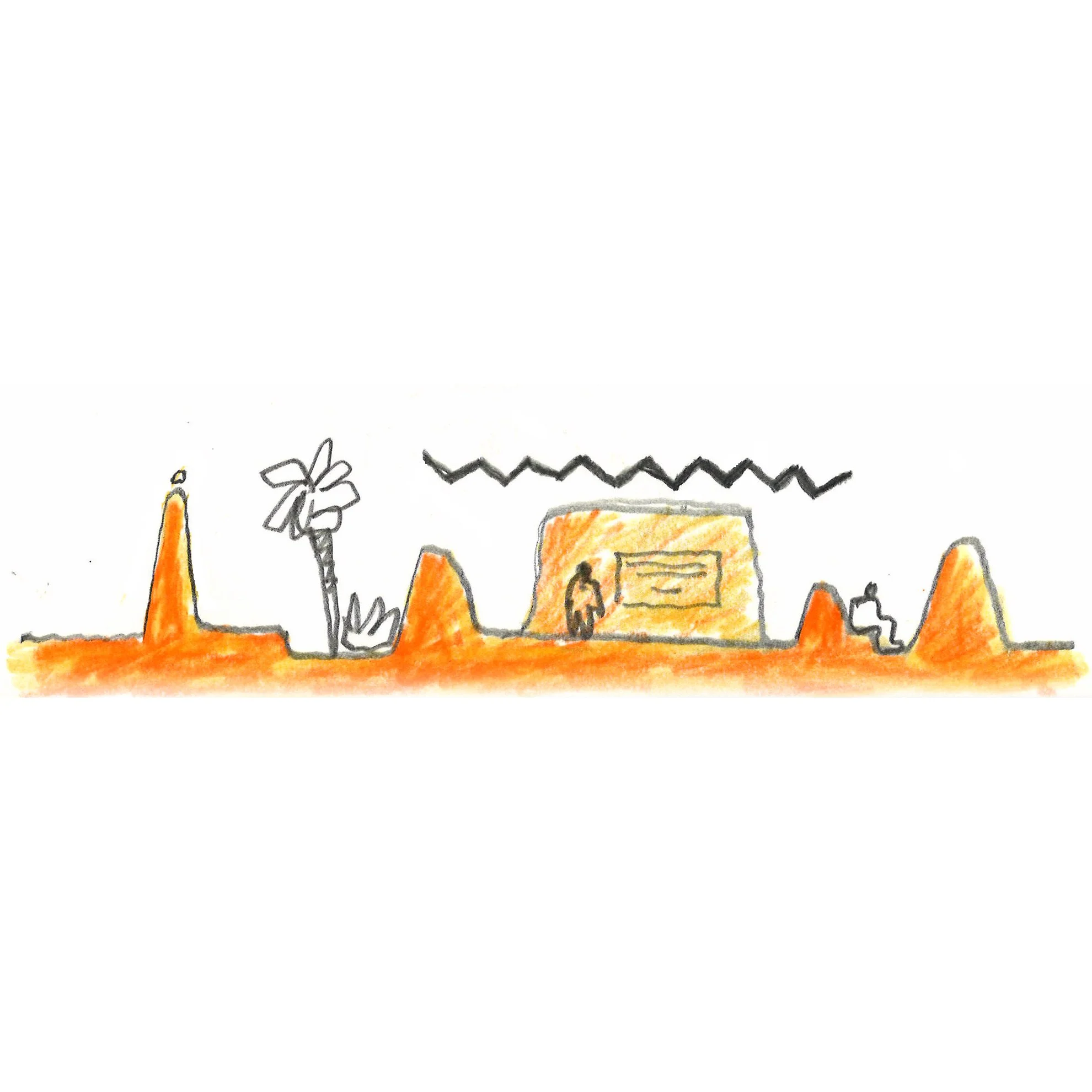 Image 2 of 9
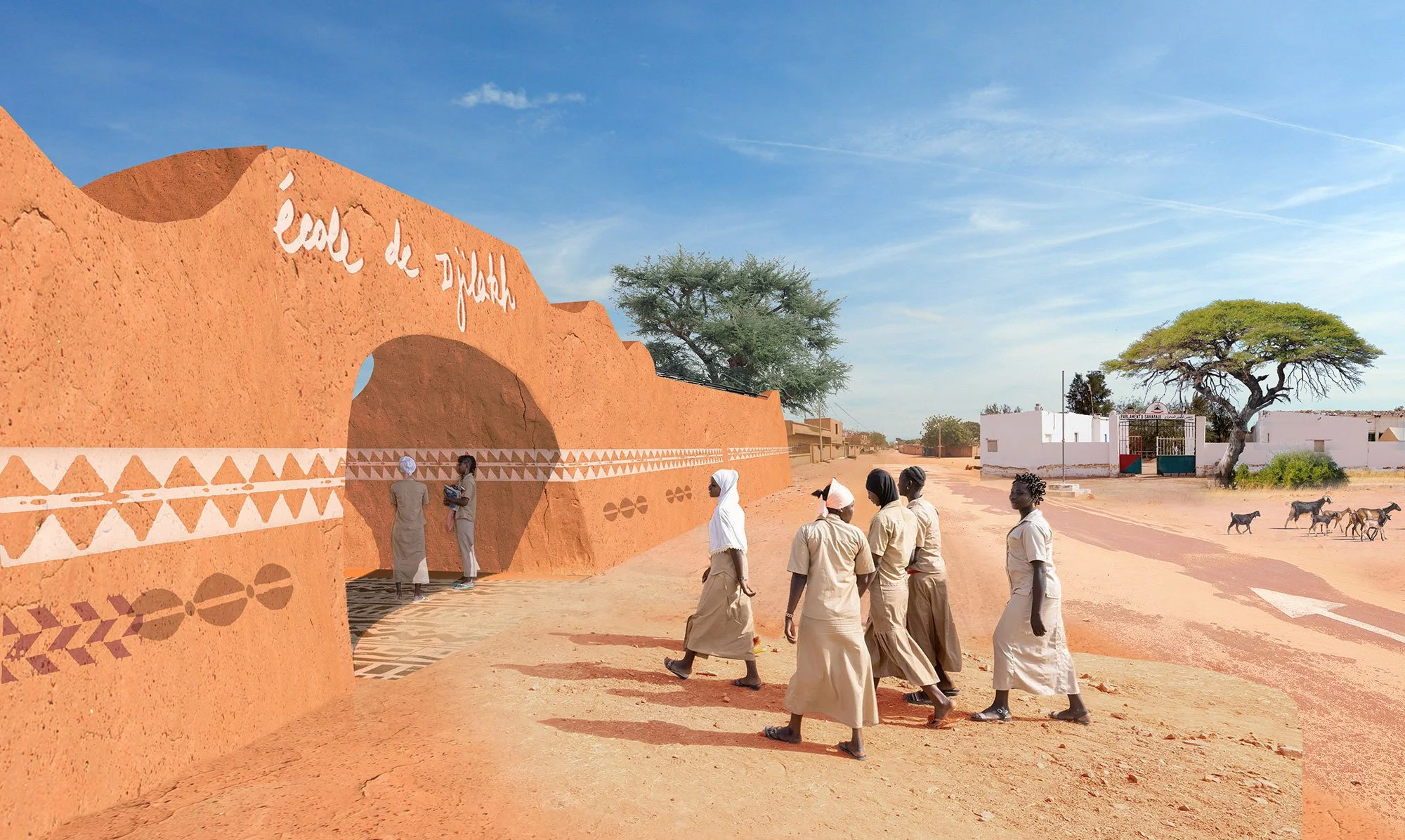 Image 3 of 9
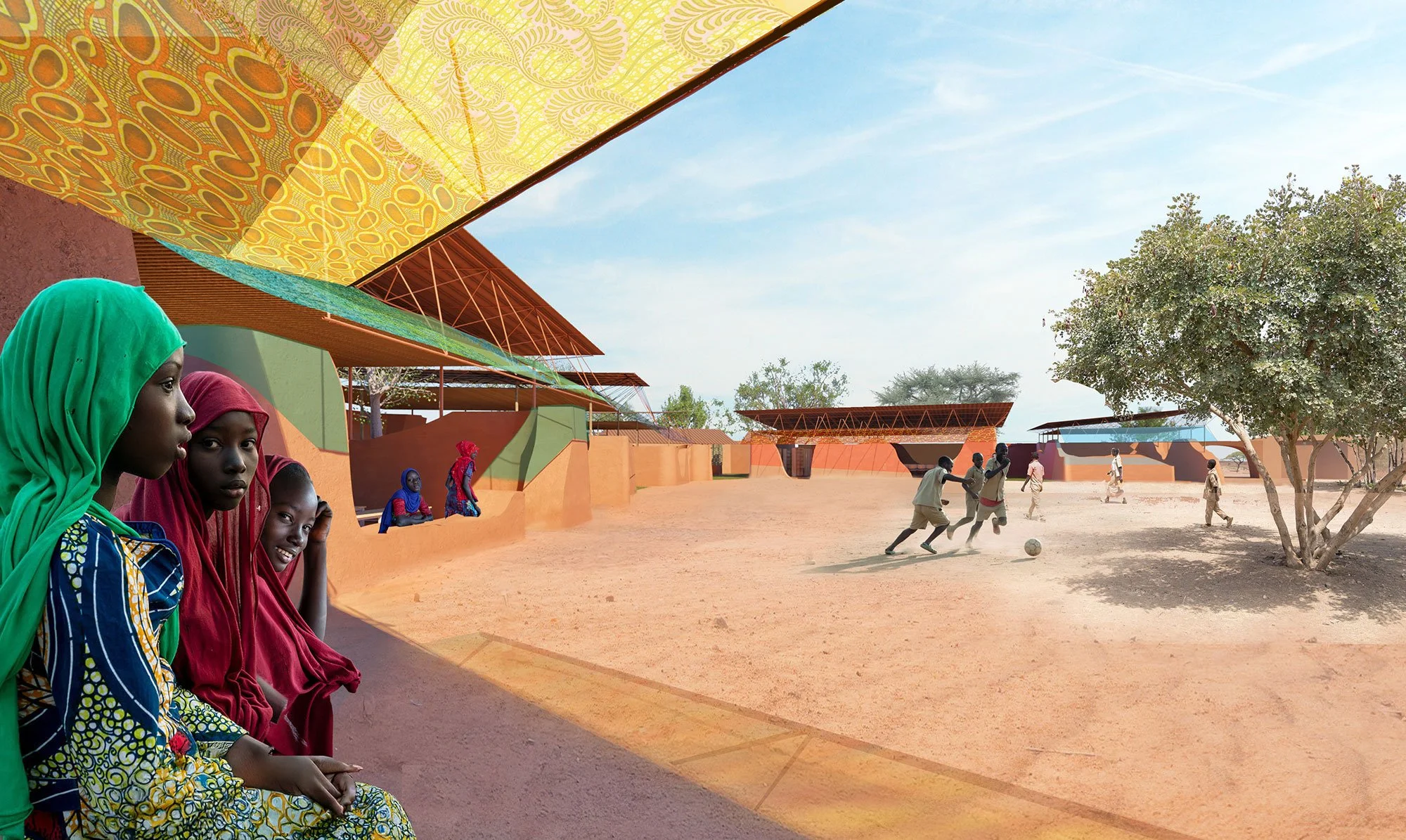 Image 4 of 9
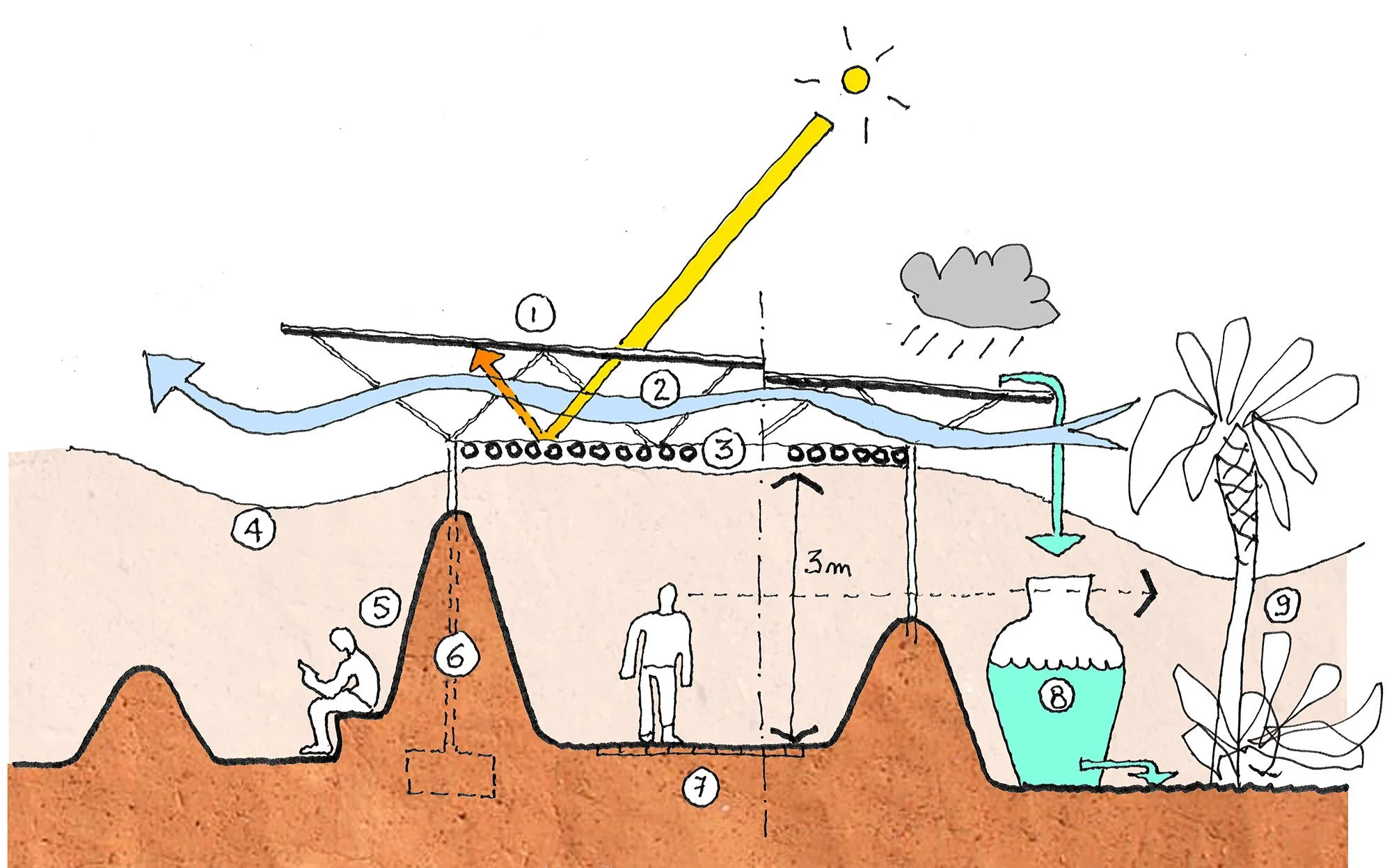 Image 5 of 9
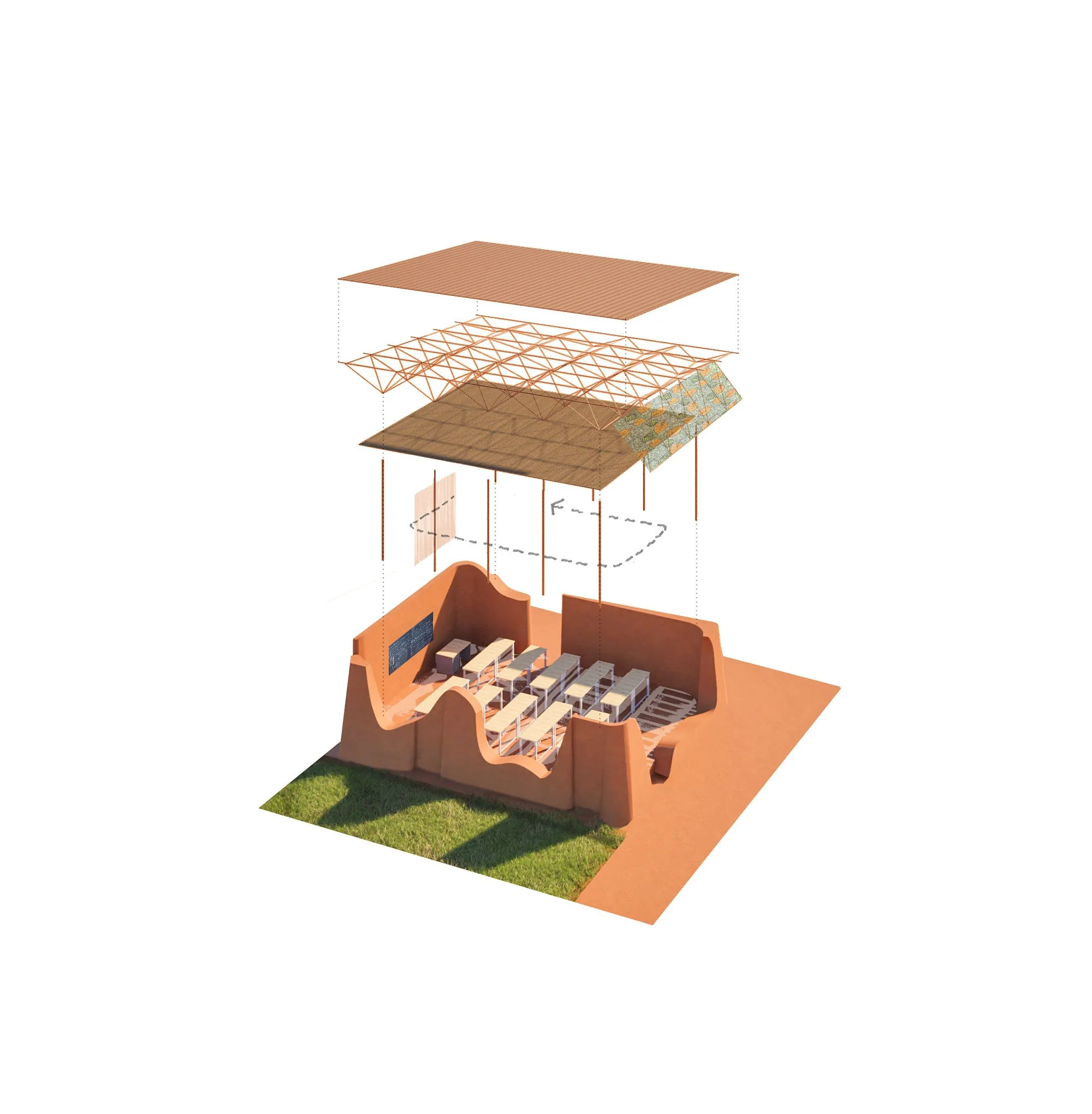 Image 6 of 9
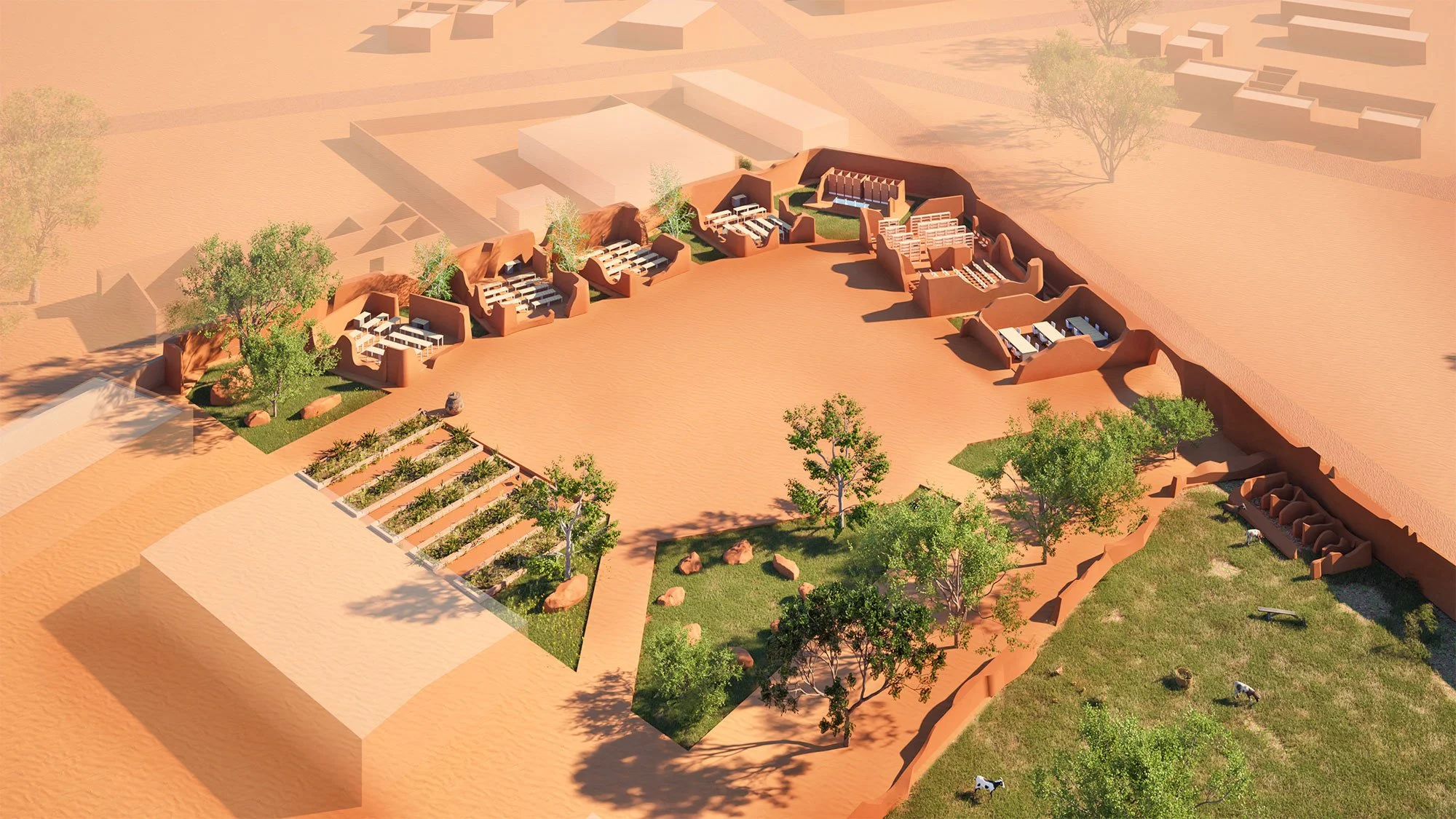 Image 7 of 9
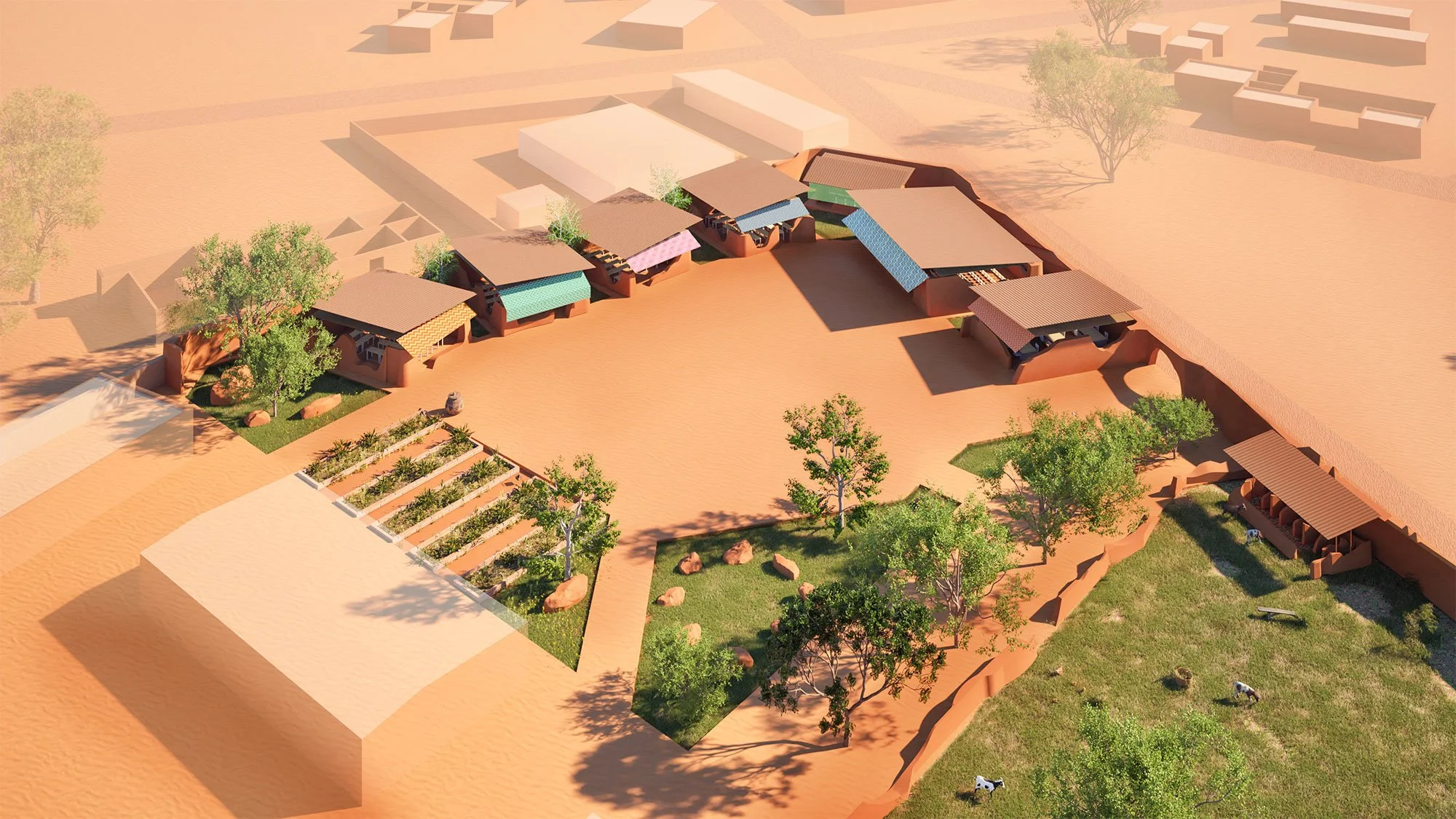 Image 8 of 9
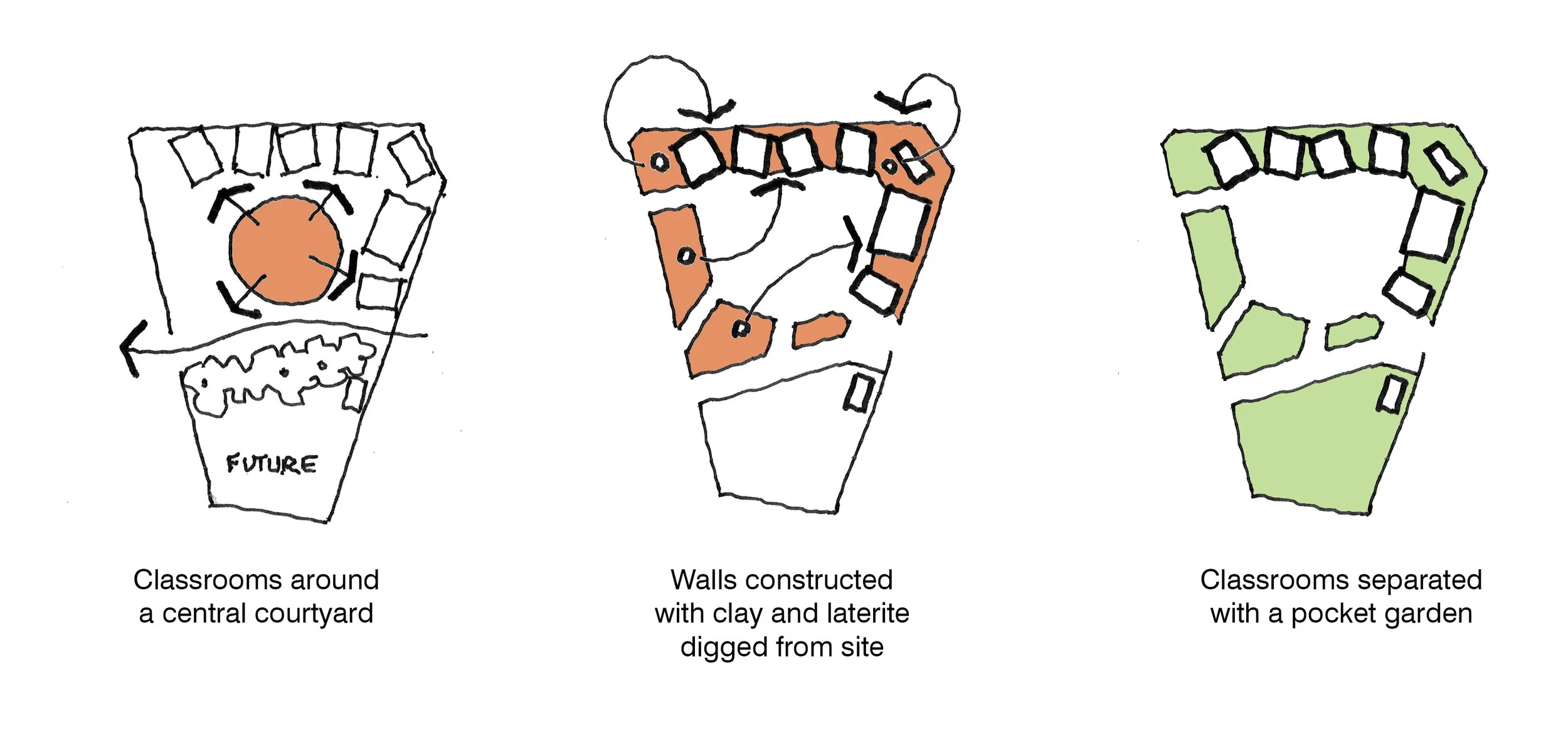 Image 9 of 9